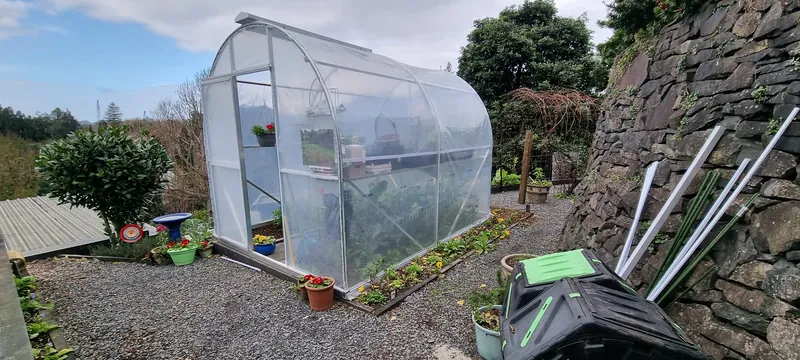
Sun and orientation
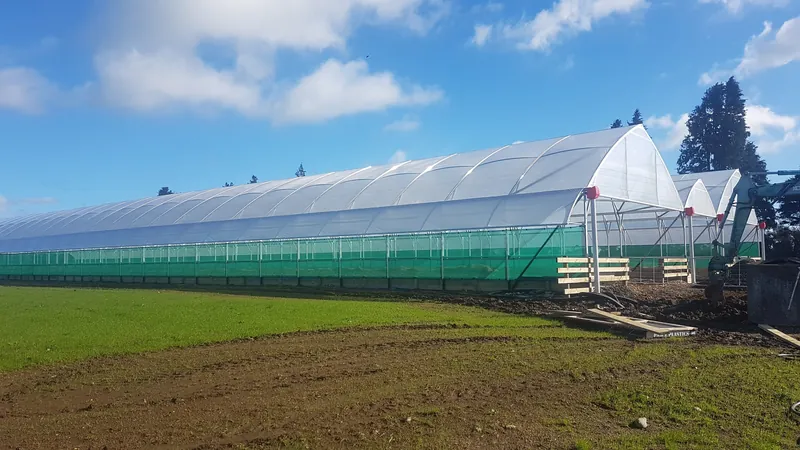
Plants need light, and in New Zealand’s winter that means maximising it. Position the greenhouse where it gets full sun through the day, away from the shadow of trees, buildings and hills.
Orientation also affects how light spreads through the structure. Your builder can advise on the best row and ridge direction for your crop and latitude.
Shelter from wind
Wind is the biggest threat to a greenhouse structure and covers. A shelterbelt or building on the windward side helps enormously, but don’t place the greenhouse so close that it’s shaded or turbulent. Aim for shelter at a distance that gives wind-slowing benefits without casting a shadow.
Level ground and drainage
- A level, well-drained site makes building easier and keeps the structure stable.
- Avoid low spots where cold air and water collect.
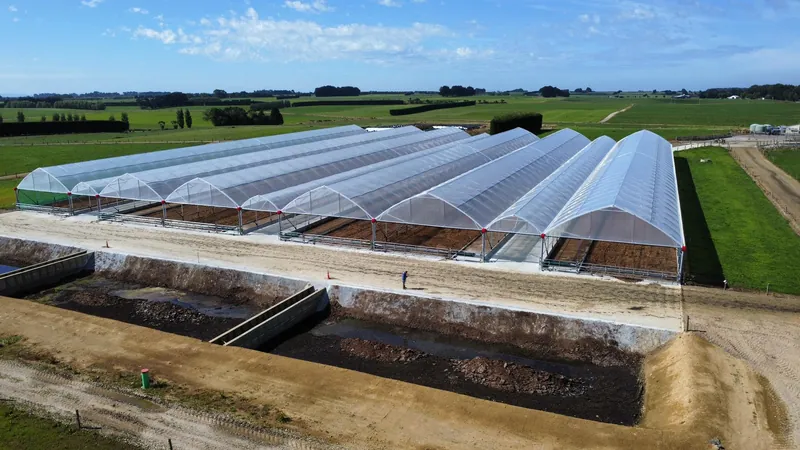
- Plan where roof runoff goes, particularly with large, multi-bay structures.
- Heavy clay or soft ground may need additional preparation.
Access
- Can trucks and machinery reach the site for construction?
- Is there room to turn trolleys, tractors or pickers inside and at the ends?
- Is the entrance convenient for daily use, including carrying produce and supplies?
Services
- Water for irrigation, ideally close and reliable.
- Power for vent drives, fans, lights or controllers.
- Drainage and wastewater, particularly for hydroponic and nursery systems.
Future expansion
If you might add bays later, leave room and plan the layout now. Moving services or removing a tree later is much harder than allowing for it at the start.