What cladding does
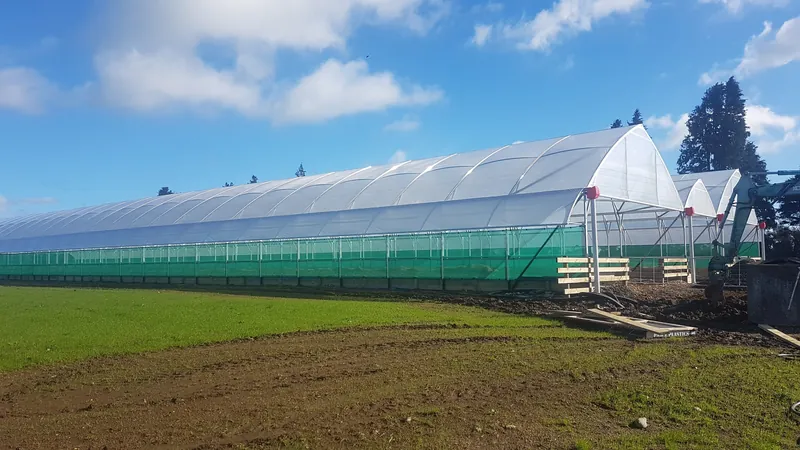
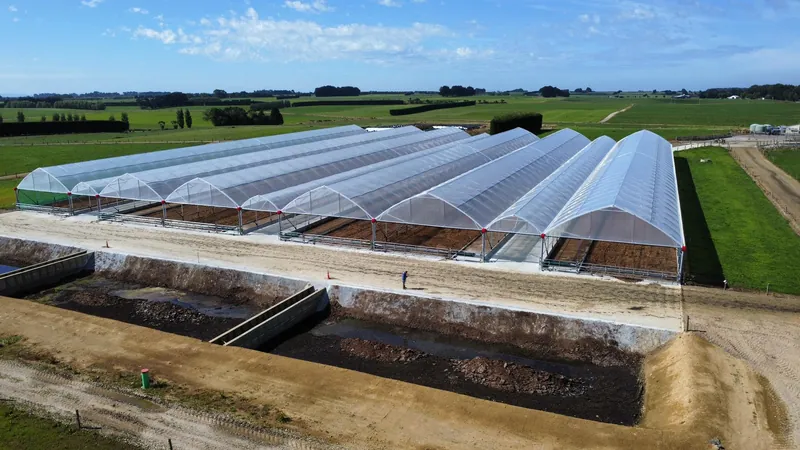
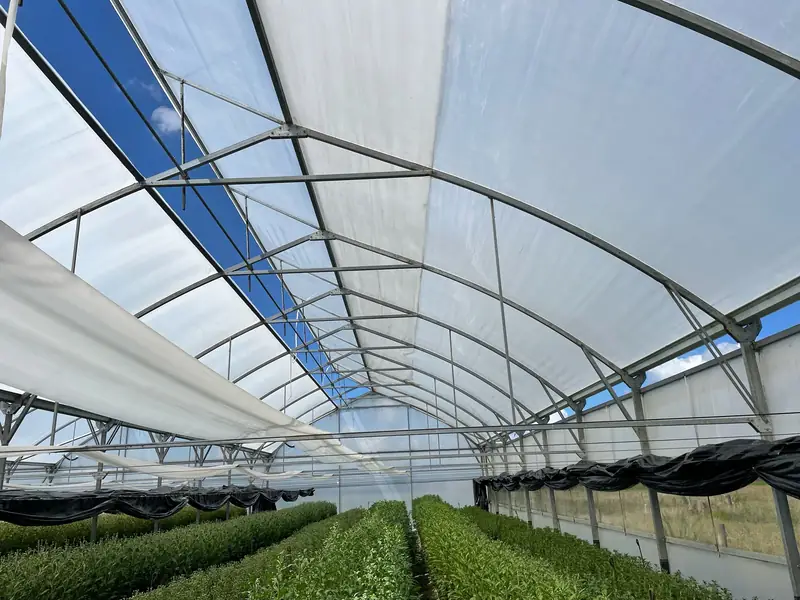
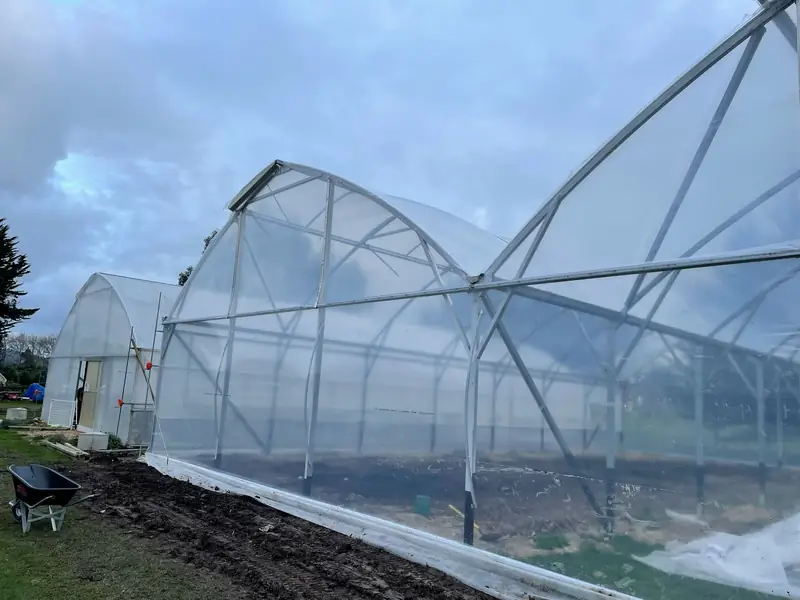
Cladding keeps weather out and warmth in while letting enough light through for the crop. The “right” material is a balance between light transmission, insulation, durability, weight, maintenance and cost.
Single-skin horticultural film
- Lowest cost and widely used on tunnelhouses.
- Good light transmission when clean and new.
- Limited insulation, so it’s better suited to milder climates or seasonal use.
- Needs periodic replacement, depending on film type and conditions.
Twin-skin (inflated) film
- Two layers separated by an air gap give much better insulation, so heating costs fall.
- Slightly lower light transmission than single skin.
- Requires an inflation system, which needs power and maintenance.
- A good option for colder regions or year-round production.
Polycarbonate and glass
- Rigid cladding is durable and long-lived, with excellent light and insulation.
- Higher upfront cost and heavier framing.
- More common on high-end, permanent structures and lifestyle greenhouses.
Other cladding choices
- Diffused or light-scattering films reduce hot spots and improve light spread.
- Anti-drip or anti-fog treatments reduce condensation.
- Shade cloth and screens manage light and heat.
- Insect netting on vent openings protects against pests.
Choosing
Think about your region’s winters, your crop’s light needs, your budget and how often you’re prepared to re-cover. If you’re unsure, ask us. We’ll recommend an option and explain the trade-offs honestly.